



Running a business requires constant decision-making.
From managing employees and serving customers to overseeing operations and cash flow, business owners often spend most of their time focused on what needs attention today. Long-term financial planning can easily move down the priority list.
Yet your business is only one part of your financial picture.
Financial planning for business owners involves looking beyond day-to-day operations to ensure your personal goals, retirement plans, and long-term financial security continue moving forward alongside your business.
Whether you are launching a new company or leading an established business, taking time to review the bigger picture can help you make more informed decisions for both your business and your future.
For many entrepreneurs, the business becomes their largest financial asset.
Years of hard work, long hours, and personal investment naturally create a strong connection between business success and personal financial success.
While your business may play an important role in building wealth, it should not become your entire financial strategy.
A comprehensive financial plan considers both your business and your personal finances. Looking at both together can help create greater flexibility and reduce the risk of relying too heavily on a single asset.
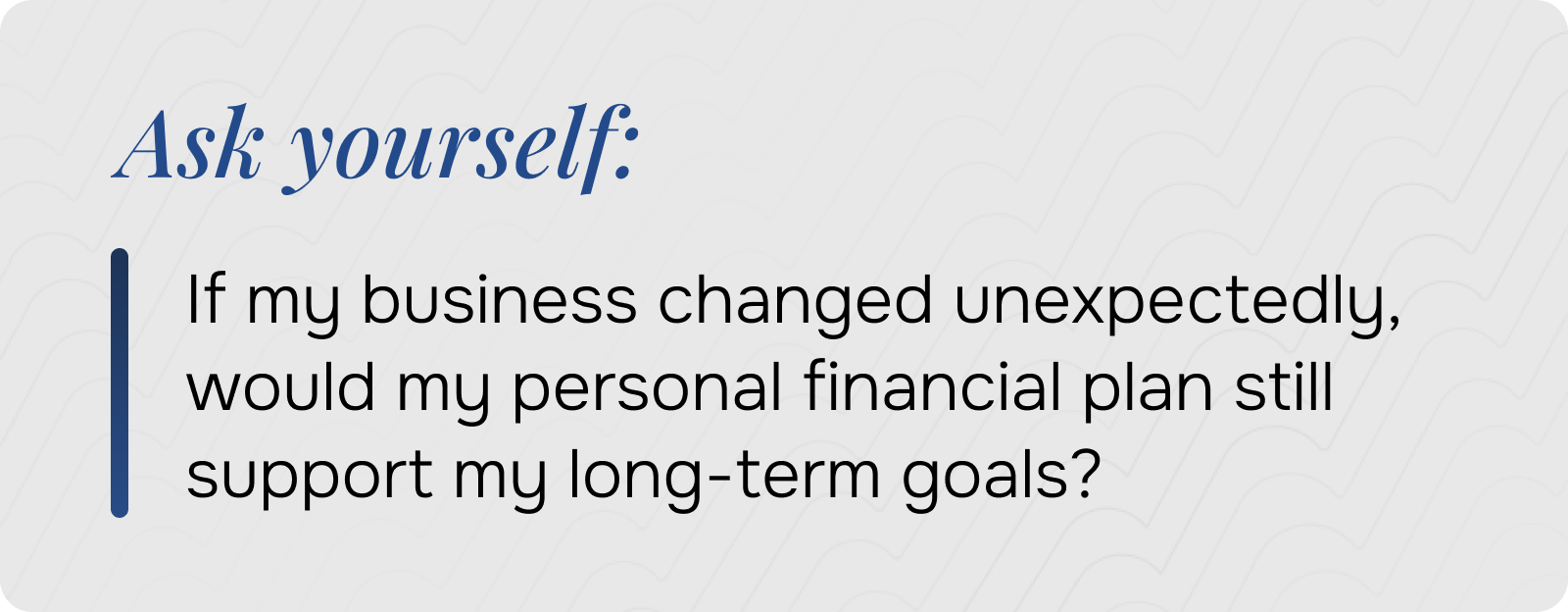
Ask yourself: If my business changed unexpectedly, would my personal financial plan still support my long-term goals?
Build Cash Reserves for Both Your Business and Your Household

Every business experiences periods of uncertainty.
Unexpected expenses, slower revenue, equipment needs, or changing market conditions can all affect cash flow.
Business reserves can help provide stability during these periods.
At the same time, personal emergency savings remain just as important.
Many business owners feel tempted to rely on business assets when unexpected personal expenses arise. Keeping separate reserves for your household and your business can provide greater flexibility while reducing unnecessary financial stress.
Both serve different purposes, and both contribute to a stronger overall financial foundation.
Business owners often reinvest profits back into their companies.
While investing in growth may be an important part of building a successful business, retirement planning should remain part of the conversation.
Some owners expect selling the business to fund retirement. While that may become one source of retirement income, it is often helpful to think about retirement from multiple angles.
Building retirement savings outside of the business can provide additional flexibility regardless of what happens years from now.
Retirement planning works best when it develops alongside the business rather than waiting until the business is ready to be sold.

Growing a business often requires focusing on quarterly goals, annual revenue, and operational improvements.
Long-term planning asks different questions.
How does business growth support your personal financial goals?
Will future growth allow more flexibility with your time?
What does financial success actually look like for you and your family?
Business growth is valuable, but it becomes even more meaningful when it supports the life you want to build outside of work.
Every business eventually reaches a point where ownership changes.
For some owners, that may mean selling the company. Others may pass it to family members, transition leadership to employees, or gradually reduce their involvement.
These conversations often feel far away until they become immediate.
Thinking about succession early provides more opportunities to prepare for whatever path makes the most sense.
A transition plan is not only about the future of the business. It also helps answer important personal financial questions about retirement, income, and long-term goals.

Building a successful business takes time.
Protecting that work is an important part of business financial planning.
Insurance, legal structures, and risk management strategies all contribute to protecting both your company and your personal financial well-being.
As your business grows, it can be helpful to periodically review whether existing protections still reflect your current circumstances.
Growth often brings new responsibilities, and your financial planning strategy should evolve alongside them.
It is easy for business owners to postpone personal financial goals while building their companies.
You may delay vacations, retirement contributions, major purchases, or other personal priorities because the business always seems to need additional attention.
While there are seasons that require extra focus, it is important to remember why you started the business in the first place.
For many entrepreneurs, the goal is not simply building a successful company. It is creating greater financial security, flexibility, and opportunities for themselves and their families.
Keeping those personal goals visible helps ensure the business continues supporting your broader vision.
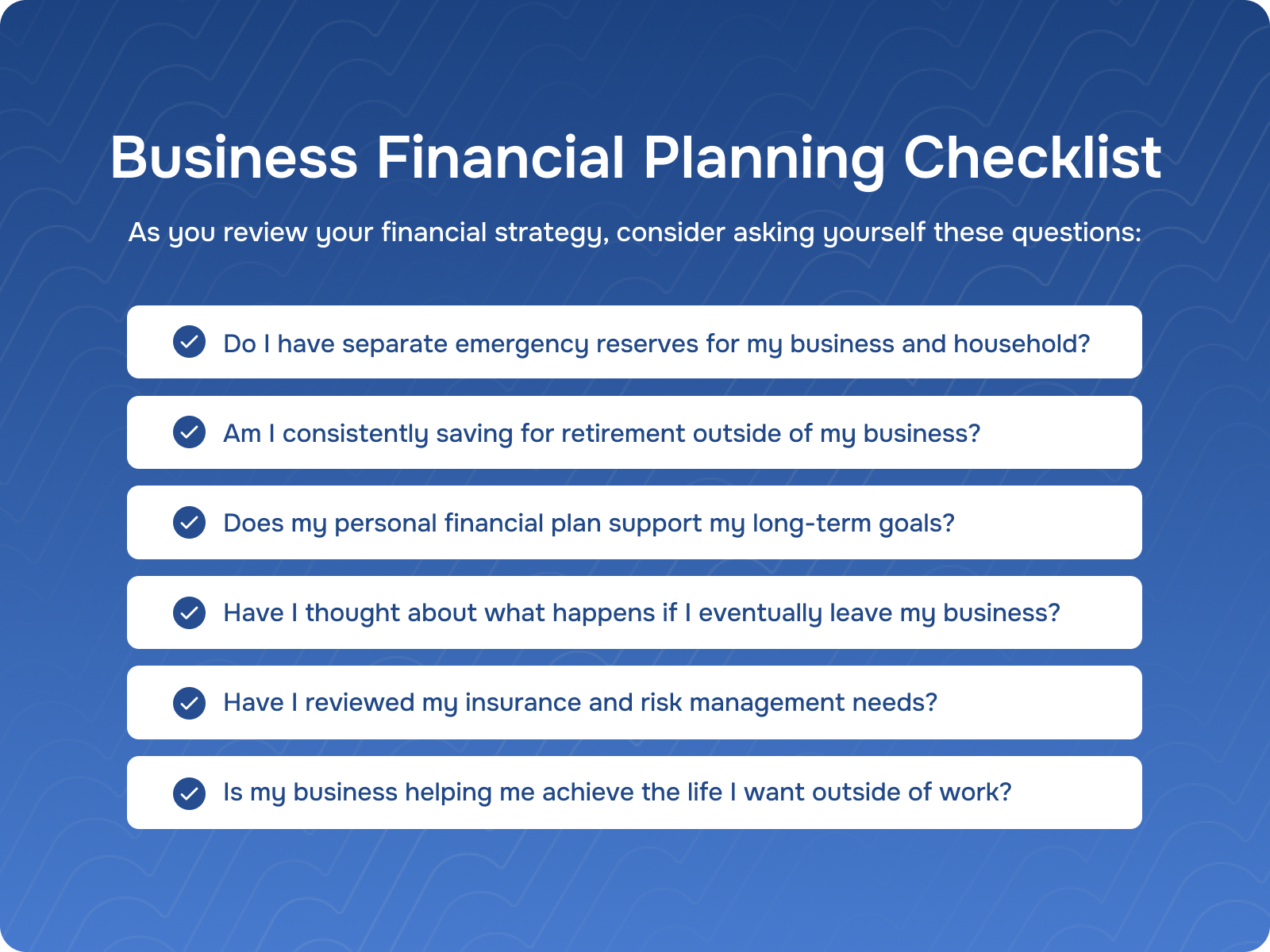
As you review your financial strategy, consider asking yourself these questions:
These questions are not meant to create pressure. They are intended to help identify areas that may deserve additional attention.
Business owners often work with accountants, attorneys, and other professionals to support different parts of their business.
Financial planning brings those pieces together by helping owners connect business decisions with personal financial goals.
A financial advisor can help evaluate how cash flow, retirement planning, succession, investments, and other financial decisions work together over time.
HTP works with business owners, professionals, and families in Athens, Georgia and across the United States, helping clients create financial plans that support both their businesses and their lives.
Running a business requires attention every day.
Financial planning provides an opportunity to step back and look beyond the next project, the next client, or the next quarter.
By building a strategy that supports both your business and your personal goals, you can make decisions with greater confidence and keep your long-term priorities in focus.
The business may be one of your greatest assets, but your financial plan should be built around the life you want it to support.
More than 99% customer satisfaction is our success.


The expertise and dedication of this team have been game-changers for our business. Highly recommended! Outstanding service! Their innovative approach helped us achieve measurable success in record time

From start to finish, the team provided unparalleled support. They truly understood our needs and delivered results that surpassed our expectations.

The team at exceeded our expectations with their strategic insights and innovative solutions. Their professionalism and dedication to our success were truly remarkable.

Thanks to Casho, we streamlined our operations and achieved our growth goals. Their hands-on approach and expertise made a real difference for our business

From day one, Casho demonstrated professionalism and a genuine commitment to our success. Their innovative approach helped us reach new heights