



Many people think about financial planning in pieces. One account here. One decision there. A retirement plan, an insurance policy, or a savings goal handled separately over time.
Comprehensive financial planning takes a different approach. It brings all parts of your financial life together so they can be viewed and managed as a whole.
If you are exploring different planning options, understanding how a comprehensive approach works can help you decide what fits your needs.
Comprehensive financial planning is a process that looks at your full financial picture rather than focusing on one area at a time.
This includes income, spending, savings, investments, insurance, taxes, and long-term goals. Each piece is reviewed in relation to the others.
Instead of asking, “Is this one decision right?” the focus shifts to a broader question.
How do all of these decisions work together?
This approach helps create a more complete understanding of your financial life.

When financial decisions are made in isolation, it is easy to overlook how one choice may affect another.
For example, increasing savings in one area may reduce flexibility in another. Changes in income may affect tax planning or long-term goals. Adjustments to insurance coverage may influence overall financial security.
A holistic financial planning approach helps connect these moving parts. Seeing everything together allows you to better understand trade-offs, priorities, and how decisions align with your broader goals.
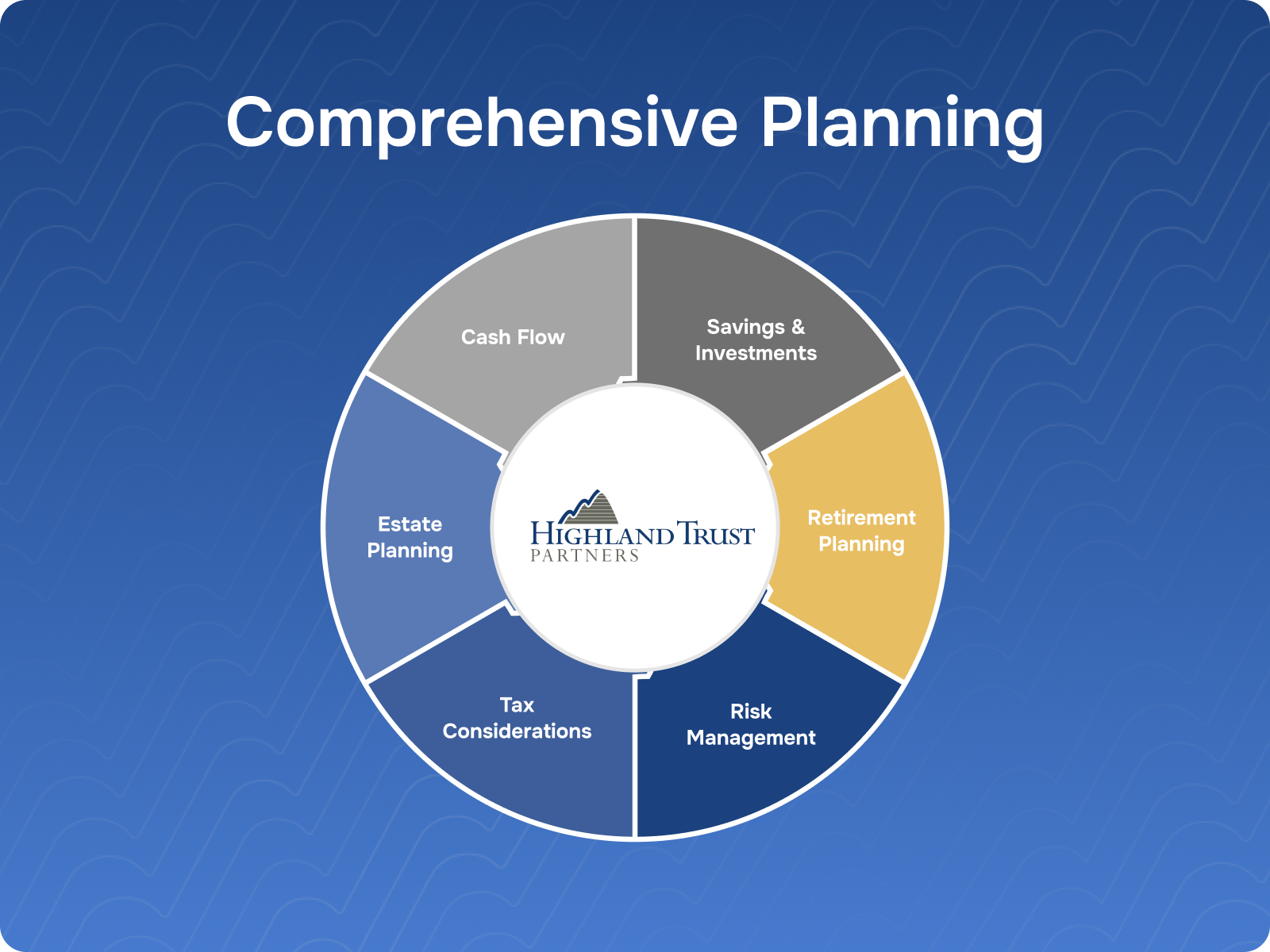
A comprehensive financial planning approach often includes several core areas:
• Cash flow and spending habits
• Savings and investment accounts
• Retirement planning
• Risk management and insurance
• Tax considerations
• Estate and legacy planning
Each of these areas plays a role in your overall financial picture.
The value of comprehensive planning comes from understanding how they interact rather than viewing them separately.
Financial plans are not static. Life changes, and your financial plan should reflect those changes.
Career shifts, family changes, home purchases, and evolving goals can all influence your financial direction.
A comprehensive approach allows for adjustments as your situation evolves. Instead of revisiting one area at a time, you can review your plan in a coordinated way.
This helps ensure that updates in one area do not unintentionally create challenges in another.
Many people begin financial planning by addressing immediate needs. This may include opening accounts, saving for specific goals, or managing debt.
Over time, these individual decisions can benefit from a more structured approach.
Comprehensive financial planning helps bring those decisions into a broader strategy. It connects short-term actions with long-term goals.
Rather than reacting to each decision as it arises, you begin to work from a clear framework. It’s a formula you should expect to find when working with a financial advisor.

A comprehensive financial planning approach often includes regular reviews.
These check-ins provide an opportunity to revisit goals, update information, and assess whether your current plan still reflects your priorities.
Reviews may take place annually or during key life events. They help keep your financial plan aligned with your current situation.
Consistency in reviewing your plan can help maintain clarity over time.
Some people manage their finances comfortably by focusing on individual areas. Others reach a point where coordination becomes more important.
This often happens as financial life becomes more complex. Multiple accounts, changing income sources, growing responsibilities, and goals like retirement and education planning can create a need for a more connected approach.
Comprehensive financial planning can help bring structure to that complexity.
A comprehensive financial planning approach can be done independently, though many people choose to work with a financial advisor.
An advisor can help organize your financial information, identify areas that may need attention, and guide conversations around priorities and trade-offs.
These discussions often focus on understanding your financial life as a whole rather than recommending isolated actions.
Highland Trust Partners works with individuals and families in Athens, Georgia and across the United States, helping them develop coordinated financial planning strategies that reflect their goals and values.
Comprehensive financial planning is about connection. It brings together the different parts of your financial life so they can work in alignment.
When your finances are viewed as a whole, decisions tend to feel more informed and less reactive.
You do not need to have everything in place to begin. Understanding how a comprehensive approach works is often the first step toward building a plan that supports your life over time.
More than 99% customer satisfaction is our success.


The expertise and dedication of this team have been game-changers for our business. Highly recommended! Outstanding service! Their innovative approach helped us achieve measurable success in record time

From start to finish, the team provided unparalleled support. They truly understood our needs and delivered results that surpassed our expectations.

The team at exceeded our expectations with their strategic insights and innovative solutions. Their professionalism and dedication to our success were truly remarkable.

Thanks to Casho, we streamlined our operations and achieved our growth goals. Their hands-on approach and expertise made a real difference for our business

From day one, Casho demonstrated professionalism and a genuine commitment to our success. Their innovative approach helped us reach new heights