



Holiday expenses rarely arrive as one clearly defined bill. There are gifts to choose, travel arrangements to make, meals to host, and small purchases that seem reasonable on their own. By the time the season is underway, it can be difficult to see what all of those decisions add up to.
October and November offer time to make a holiday spending plan before your calendar fills up. Looking ahead can help you decide what you want to enjoy, what you can comfortably spend, and how to keep everyday needs and longer-term goals moving forward.

A useful holiday budget includes more than the gift list. Think through travel, lodging, meals, entertaining, decorations, shipping, school activities, charitable donations, and any traditions your household wants to keep. Include expenses that occur before the holiday itself, such as booking a flight or buying supplies for an event.
Last year’s statements can provide a starting point, but this year may look different. You might be hosting more people, traveling farther, welcoming a new family member, or choosing a quieter celebration. Adjust the estimate to reflect the plans you actually have.
Separate confirmed commitments from possibilities. An invitation you have accepted belongs in a different category from a trip you are still considering. Seeing that distinction makes it easier to understand where you still have flexibility.
Before assigning amounts to gifts or travel, look at the money available after regular bills, debt payments, and planned savings. Consider what is already set aside for the holidays and what you can reasonably add before expenses come due.
There is no universal amount a household should spend. The right range depends on income, commitments, and priorities. If income varies, build your initial plan around money you can reasonably count on. You can revisit the plan if an expected bonus or additional work income arrives.
Give yourself a target and an upper limit. The target can guide ordinary decisions, while the limit helps you recognize when adding something means adjusting another part of the plan. Leave room for small surprises if your budget allows.

Budgeting for the holidays often involves expectations that nobody has said out loud. One person may be imagining a large gathering while another assumes a small dinner. Adult children may be comfortable simplifying gifts, while parents feel pressure to maintain a long-standing tradition.
Talk about the parts of the season people value most. A gift exchange, a shared spending limit, or a meal where everyone contributes may fit the group better. Give relatives enough notice to plan around any changes.
Keep the conversation specific and positive: “We would love to host dinner, and we’re asking everyone to bring a dish this year.” You can explain your plans without sharing private financial details or asking others to make the same choices.
A credit card can be a convenient way to make purchases, but the spending still needs to fit your plan. Before using it, consider when the bill will arrive and which funds will pay it. If you expect to carry a balance, account for interest when evaluating the total cost.
Buy now, pay later offers also commit future income. Several small installment plans can overlap, leaving less room for groceries, utilities, or savings in the following months.
Record the full purchase price in your holiday budget when you commit, even if the payments are spread out. Then note each payment date in your cash-flow plan. This gives you both views: what the season costs and when the money leaves your account.

Holiday plans sit alongside the rest of your financial life. Before making a larger purchase, consider how it affects emergency reserves, retirement contributions, education savings, debt repayment, or another goal that matters to your household.
If you decide to temporarily redirect money from a goal, make the tradeoff deliberate. Identify how much you are changing and when you will revisit the decision. A small adjustment may be manageable; repeated unplanned changes can be harder to notice.
For couples, it can help to agree on which purchases need a conversation first. That might be airfare, a larger gift, or hosting an additional event. A shared understanding reduces the need to renegotiate every small expense while keeping significant decisions visible.
A holiday spending plan should be easy to update. Keep a running total of what you have spent, what you have committed to, and what remains. A brief weekly check-in during the holidays can help you see whether the original estimate still fits.
If travel costs more than expected, decide where to adjust before continuing with the rest of the list. If you spend less in one category, you can leave that money unspent. A sale or an unused allowance does not have to become another purchase.
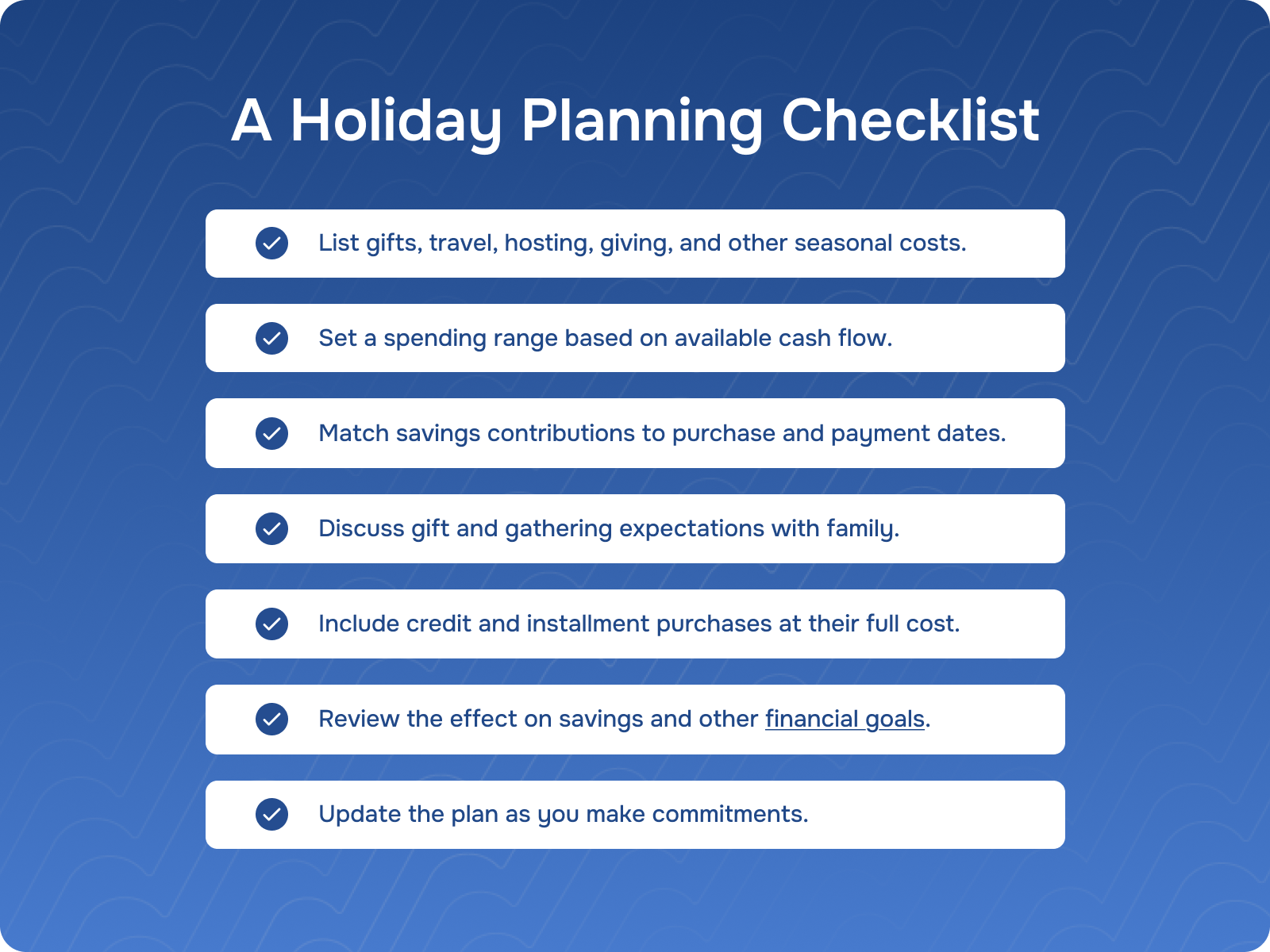
Planning ahead gives you room to choose the parts of the holidays you want to prioritize. Whether that means traveling to see family, keeping a favorite tradition, or enjoying a quieter season, a clear spending plan can make those choices easier to manage.
Highland Trust Partners can help you consider seasonal expenses within your broader financial plan. If you are balancing holiday spending with changing income, family support, or retirement goals, a conversation with our team can help you identify a practical path forward.
More than 99% customer satisfaction is our success.


The expertise and dedication of this team have been game-changers for our business. Highly recommended! Outstanding service! Their innovative approach helped us achieve measurable success in record time

From start to finish, the team provided unparalleled support. They truly understood our needs and delivered results that surpassed our expectations.

The team at exceeded our expectations with their strategic insights and innovative solutions. Their professionalism and dedication to our success were truly remarkable.

Thanks to Casho, we streamlined our operations and achieved our growth goals. Their hands-on approach and expertise made a real difference for our business

From day one, Casho demonstrated professionalism and a genuine commitment to our success. Their innovative approach helped us reach new heights