



Spring is often a time to reset. You may clean out closets, organize your home, and take care of things that have been put off during the year.
Your finances can benefit from the same approach.
Financial spring cleaning is not about making major changes. It is about simplifying what you already have, improving visibility, and creating a system that feels easier to manage.
If your financial life feels scattered or harder to keep track of, a few focused steps can help you bring things back into order.

Before simplifying your finances, it helps to understand what you currently have.
Take time to list your accounts, including bank accounts, credit cards, retirement plans, investment accounts, and any loans. This step may also include identifying where your accounts are held and how often you use them.
Many people discover accounts they rarely think about. Others realize that their finances are spread across more places than expected.
This simple inventory creates awareness. It gives you a clear starting point for organizing everything that follows.
Over time, it is common to accumulate multiple accounts. Old checking accounts, inactive retirement plans, or extra credit cards can add unnecessary complexity.
Consolidating accounts can make your financial life easier to manage.
This may involve rolling over an old retirement account, closing unused credit cards, or simplifying your banking structure. The goal is not to eliminate options. It is to reduce clutter.
Fewer accounts often lead to better visibility and fewer things to track on a regular basis.
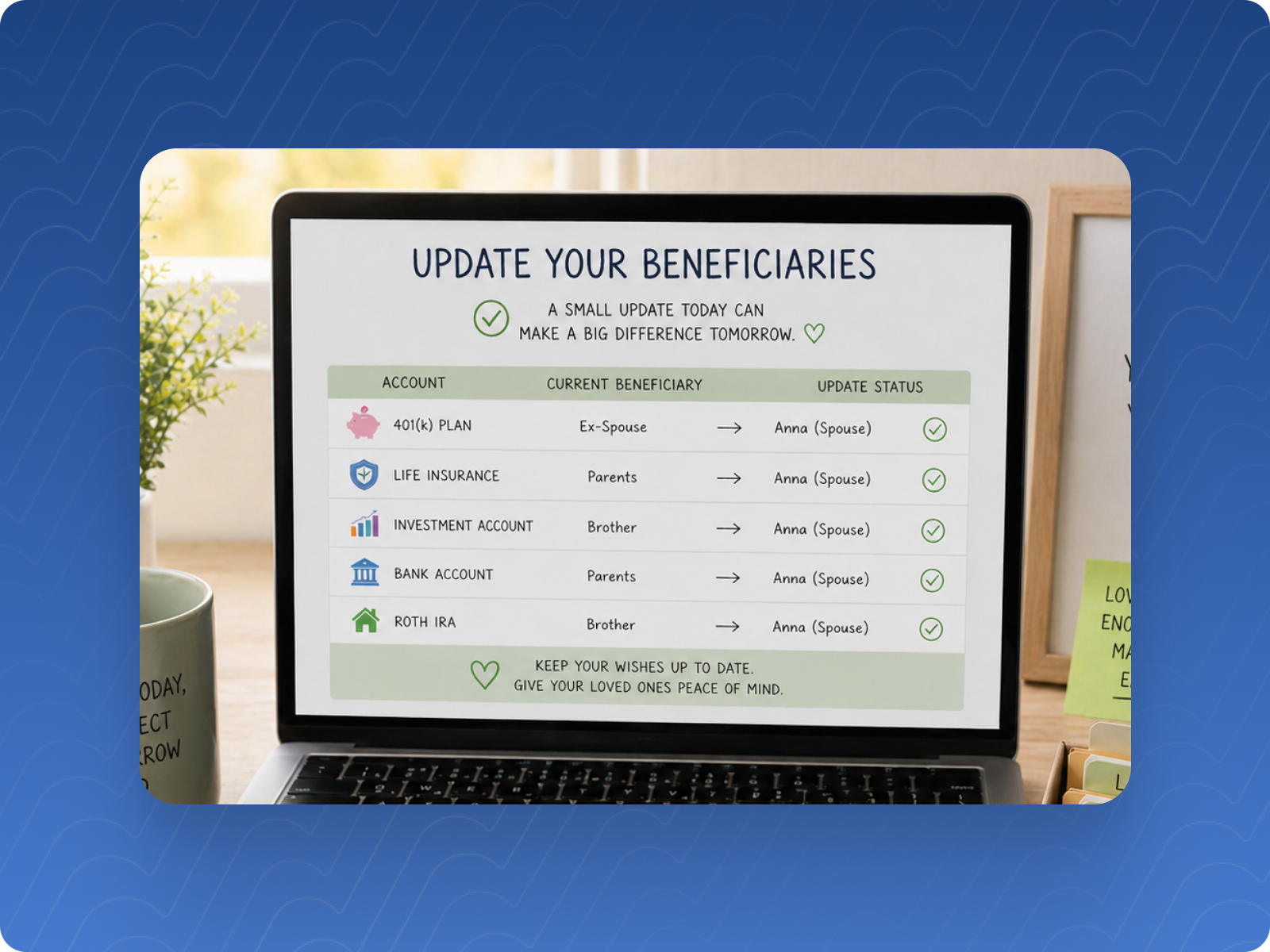
Beneficiary designations are an important part of financial organization that often gets overlooked.
Accounts such as retirement plans, life insurance policies, and certain investment accounts typically allow you to name beneficiaries. These designations can determine how assets are handled in the future.
Life changes such as marriage, divorce, or the addition of children may affect your preferences.
Taking time to review and update beneficiaries helps ensure your accounts reflect your current situation.

Subscriptions and recurring charges can quietly build up over time.
Streaming services, software subscriptions, memberships, and other automatic payments may continue even when they are no longer needed.
Reviewing these expenses can help you identify what you actively use and what may no longer add value.
This step is not about eliminating all subscriptions. It is about making intentional choices about where your money goes each month.
One of the main goals of financial spring cleaning is improving visibility.
When you can clearly see your accounts, balances, and recurring expenses, decision-making becomes easier. You spend less time searching for information and more time understanding it.
Some people use financial apps to bring everything together in one place. Others prefer a simple spreadsheet or document that tracks key information.
The method matters less than having a system that works for you.
Financial documents can quickly become difficult to manage if they are not organized.
Tax returns, insurance policies, account statements, and estate planning documents are all important to keep accessible.
Creating a simple filing system can make these documents easier to find when needed. This may include digital folders with clear labels or a physical file for key records.
Organization helps reduce stress and ensures that important information is available when it matters.
As you review your finances, look for areas where things feel more complicated than they need to be.
This might include overlapping accounts, unnecessary fees, or processes that take more time than expected.
Simplifying does not require large changes. Small adjustments, such as automating certain payments or consolidating accounts, can make a meaningful difference.

Answering that question can point you toward practical improvements. Working with a financial planner can help bring clarity to your situation.
Spring cleaning is often an annual habit. Financial organization can benefit from a similar rhythm.
Setting aside time once or twice a year to review and organize your finances helps prevent clutter from building up again.
These check-ins can be simple. The goal is to maintain clarity rather than start from scratch each time.
Consistency helps keep your financial system working smoothly.
Some people prefer to handle financial organization on their own. Others find value in working with a financial advisor who can provide structure and perspective.
A financial professional can help you identify areas to simplify, organize your financial information, and connect different parts of your financial life.
Highland Trust Partners works with individuals and families in Athens, Georgia and across the United States, helping them simplify finances and build systems that support long-term planning.
Financial spring cleaning offers an opportunity to reset.
By organizing accounts, reviewing subscriptions, updating important details, and improving visibility, you can create a financial system that feels easier to manage.
You do not need to address everything at once. A few small steps can help you move toward a more organized and streamlined financial life.
Clarity often leads to confidence.
More than 99% customer satisfaction is our success.


The expertise and dedication of this team have been game-changers for our business. Highly recommended! Outstanding service! Their innovative approach helped us achieve measurable success in record time

From start to finish, the team provided unparalleled support. They truly understood our needs and delivered results that surpassed our expectations.

The team at exceeded our expectations with their strategic insights and innovative solutions. Their professionalism and dedication to our success were truly remarkable.

Thanks to Casho, we streamlined our operations and achieved our growth goals. Their hands-on approach and expertise made a real difference for our business

From day one, Casho demonstrated professionalism and a genuine commitment to our success. Their innovative approach helped us reach new heights