



A text says your bank account has been locked. A caller offers to help resolve an unfamiliar charge. An email appears to come from someone you have worked with for years. In each case, the immediate question is the same: Is this a real request, and what should you do next?
October’s Cybersecurity Awareness Month is a useful reminder to review how you protect financial accounts. A few repeatable habits can make it easier to recognize a questionable request, check it independently, and respond with confidence. Financial fraud prevention belongs alongside the other steps you take to protect your household’s financial well-being.

Scams often begin with a familiar situation: a payment problem, an account notification, or a request to confirm personal information. The Federal Trade Commission’s guidance on phishing explains how emails and texts can imitate businesses you already know. A recognizable logo does not establish that a message is legitimate.
Pay attention to what you are being asked to do. An unexpected link, attachment, or request for account details deserves a separate check. You do not need to decide whether the entire message is convincing before choosing to verify it.
If someone contacts you about your money, end the conversation and reach the organization independently. Use the number on your account statement or payment card, or open the official app you normally use. Avoid using a callback number or link supplied in the questionable message.
For example, if a caller says your investment account needs immediate attention, call your financial professional using the contact information already in your records. Describe the request and ask whether it came from the firm. This extra step lets you investigate a possible problem without following an unverified person’s instructions.
Treat an unexpected request for a login verification code as a reason to stop. The FTC warns that sharing these codes can give scammers access to financial accounts. Do not relay a login code or approve a sign-in request you did not initiate, even if the person contacting you sounds helpful.
Start with a different, strong password for each financial account. A reputable password manager can help generate and store unique passwords so that you do not have to memorize them all. Include your email account in this review because it may receive sensitive messages and password-reset links.
Turn on multi-factor authentication wherever it is available. This adds another verification step beyond your password, such as an authenticator app or security key. Review the options offered by each institution and choose a method you can use reliably. CISA’s account-security guidance recommends strong passwords, a password manager, and multi-factor authentication as practical safeguards.
Set aside a manageable amount of time for the review. You might start with your primary bank, investment account, and email, then work through the rest. Keep your devices and apps updated so their available security protections remain current.
Ask your financial institutions which account alerts they offer. Depending on the provider, you may be able to receive notifications about withdrawals, transfers, sign-ins, or changes to your contact information. The SEC’s guidance on online investment accounts highlights alerts as one way to monitor for suspicious activity.
Continue reviewing statements and recent transactions, even when alerts are enabled. Look for activity you do not recognize and unexpected changes to account details. Confirm that your email address and phone number are current so legitimate notifications can reach you.
Choose a routine that fits your household, such as reviewing transactions when you pay bills. If an alert looks unusual, check through the institution’s official app or a known phone number. A notification should prompt verification, especially when it includes instructions to move money.

A conversation about scams can be easier when it starts with something you are doing yourself: “I’m reviewing my account alerts this month. Would you like to go through yours together?” Ask what would be useful and respect the level of involvement your parent wants.
With their permission, help organize a short list of verified phone numbers for their bank, financial professional, and a family member they trust. Agree that an unfamiliar request for money is something you can discuss before anyone acts. Make clear that asking for help will not lead to criticism, even if a link was clicked or information was shared.
If you sent money or disclosed account information, contact the bank, card issuer, investment firm, or payment provider promptly through a verified channel. Explain what happened and ask what can be done to secure the account and stop or reverse the transaction. Recovery is not guaranteed, but reporting quickly gives the provider an opportunity to respond.
Change any compromised passwords, including on other accounts where you reused them. Keep relevant messages, receipts, and transaction details. The FTC’s scam-response guide outlines steps for different payment methods and types of information shared. You can report scams through the FTC’s fraud reporting service and use its identity-theft recovery service if your personal information has been misused.
It is understandable to feel unsettled after a suspicious interaction. Focus on the next useful action and involve someone you trust if you would like support. You do not need to investigate everything yourself before contacting the institution.
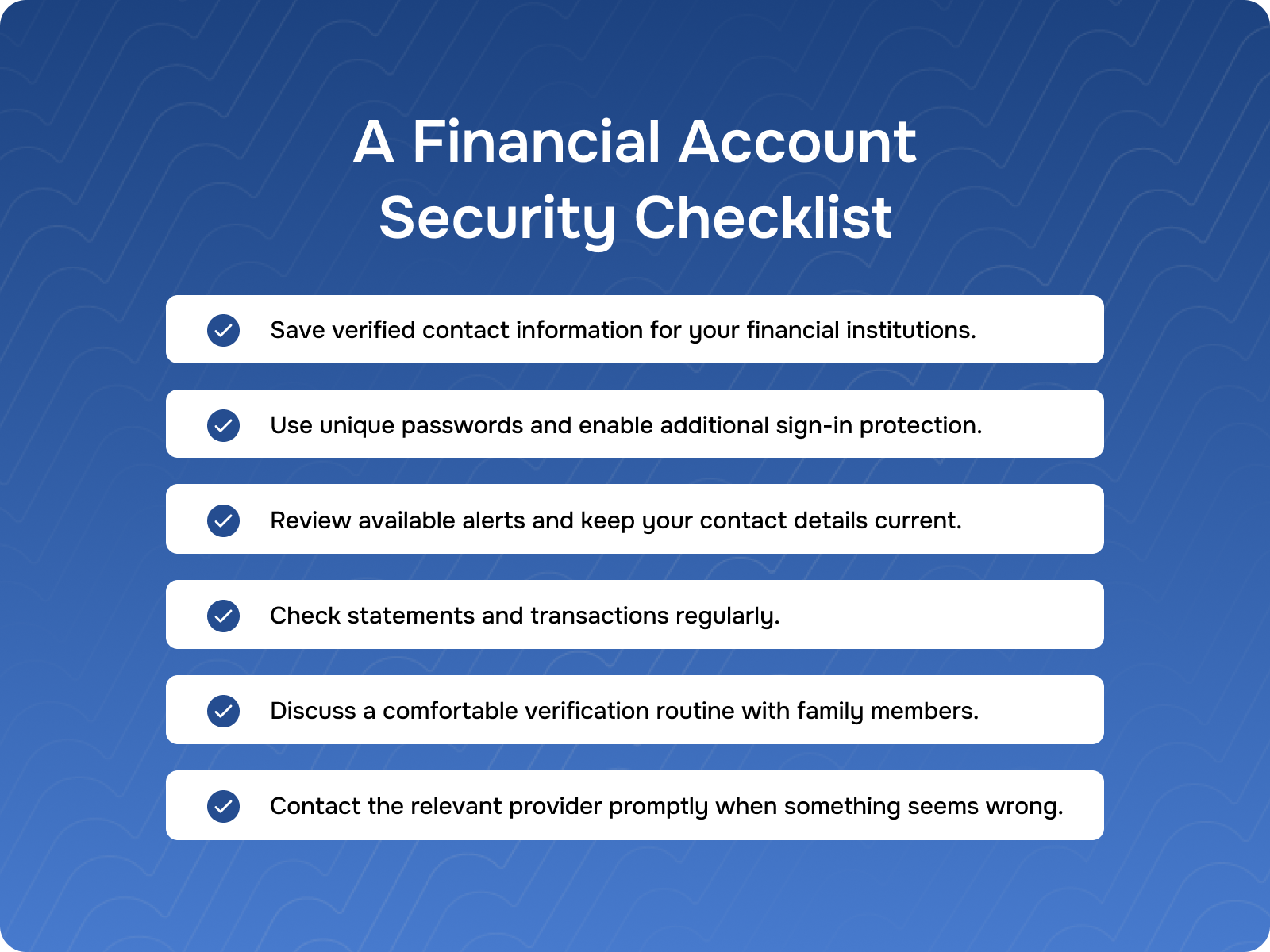
Learning how to avoid financial scams is an ongoing process. A consistent verification routine, stronger account access, and clear family communication can support the work you are already doing to save, invest, and prepare for the future.
At Highland Trust Partners, financial planning considers how the different parts of your financial life work together. If you would like to discuss account organization or how to prepare family members for future responsibilities, our team can help you connect those questions to your broader plan.
More than 99% customer satisfaction is our success.


The expertise and dedication of this team have been game-changers for our business. Highly recommended! Outstanding service! Their innovative approach helped us achieve measurable success in record time

From start to finish, the team provided unparalleled support. They truly understood our needs and delivered results that surpassed our expectations.

The team at exceeded our expectations with their strategic insights and innovative solutions. Their professionalism and dedication to our success were truly remarkable.

Thanks to Casho, we streamlined our operations and achieved our growth goals. Their hands-on approach and expertise made a real difference for our business

From day one, Casho demonstrated professionalism and a genuine commitment to our success. Their innovative approach helped us reach new heights