



If someone needed to help with your finances or make a medical decision on your behalf, would they know what to do? Estate planning gives you a way to name trusted people, explain your wishes, and reduce uncertainty for the people who may one day act for you.
An estate planning checklist is useful at any stage of adulthood, whether you are starting a family, running a business, or preparing for retirement.
The seven document types below provide a starting point for review. You may not need seven separate forms: some states combine healthcare documents, and a trust is appropriate only in certain situations. An estate-planning attorney can help determine what fits your circumstances and state law.

A will states how you want assets governed by the will distributed after your death and names an executor to handle estate responsibilities. Review the people and organizations named, any specific gifts, and your choice of executor and alternate.
For parents of minor children, a will can also nominate a guardian. Talk with the proposed guardian about the role and name a backup where appropriate. The court makes the appointment under applicable law, taking the child’s interests into account. The person raising a child does not necessarily need to be the same person managing the child’s inheritance.
The American Bar Association’s introduction to wills explains why a will must be considered alongside other arrangements. Assets passing through beneficiary designations, certain joint ownership arrangements, or a funded trust may follow different instructions.
A trust establishes rules for managing and distributing assets held in it. Depending on its design, it may support management during incapacity, provide for beneficiaries over time, or address more complex family needs. Review the trustee, successor trustee, beneficiaries, and distribution provisions.
Signing a trust agreement is only part of the process. Confirm with your attorney which assets should be titled in the trust and whether the necessary transfers were completed. Some assets require different treatment; do not retitle retirement accounts into a living trust without professional guidance.
The ABA’s overview of revocable trusts explains that their usefulness depends on the situation. A revocable living trust is not automatically a tax-saving or asset-protection strategy, and not everyone needs one. If you already have a trust, ask whether it remains appropriate and whether its funding matches the plan.

Retirement accounts, life insurance policies, and certain bank or investment accounts can transfer through beneficiary designations. Review the actual forms or provider records, including both primary and contingent beneficiaries. Confirm that names and allocation percentages reflect your current wishes.
These designations generally operate separately from a will. For example, a will dividing an estate among children does not necessarily change a life insurance policy naming only one child.
Ask for advice before naming a minor, a trust, or someone who receives means-tested benefits. The way an inheritance is structured can affect who manages it and how it interacts with other support. Keep copies of updated designations and confirm that the provider accepted them.
A financial power of attorney authorizes an agent to act for you within the powers the document grants. It may cover tasks such as paying bills, managing accounts, or handling property. A durable power of attorney generally continues to be effective if you become incapacitated, as the Consumer Financial Protection Bureau explains.
Review when the authority begins, what it permits, and whom you have named as agent and successor. Choose someone trustworthy and capable of keeping careful records. Ask your attorney about any special authority needed for business interests or other responsibilities. A financial power of attorney generally ends at death; it does not replace an executor’s role.

This document names a person to make healthcare decisions when you cannot make them yourself, under the document’s terms and state law. Choose someone who understands your priorities and can communicate with medical professionals.
Discuss your wishes with that person and name an alternate. Be sure you review contact details and share copies with the appropriate providers.
A living will records preferences about medical treatment in circumstances defined by the document and applicable law. It can help your healthcare agent and clinicians understand what matters to you when you cannot communicate.
Review the instructions with your healthcare provider so you understand the choices and their implications. Revisit them after a significant diagnosis or change in your preferences. Written instructions are most useful when the people involved also understand your values, concerns, and priorities.

A medical information authorization can identify people with whom providers may share specified health information. Review who is named, what information may be disclosed, and any expiration or revocation terms.
Access to information and authority to make decisions are different functions. A HIPAA authorization alone does not appoint someone as your healthcare decision-maker. HHS guidance explains that written authorization is one way information may be shared; other permissions and personal-representative rights may also apply. Ask your attorney and providers whether your existing documents address the access you intend.
Bring the documents together and look for inconsistencies. Do the names match? Are the people you selected still willing and able to serve? Do account titles and beneficiary forms support the instructions in your will or trust?
Business owners should also ask how ownership agreements, succession arrangements, and access to business records fit with their personal estate planning documents. Families should revisit guardianship choices as children grow and circumstances change.
Schedule a review after marriage, divorce, a birth or adoption, a death, a move to another state, a major health change, or a significant change in assets. Ask your attorney how to update documents properly rather than making handwritten edits that may create uncertainty.
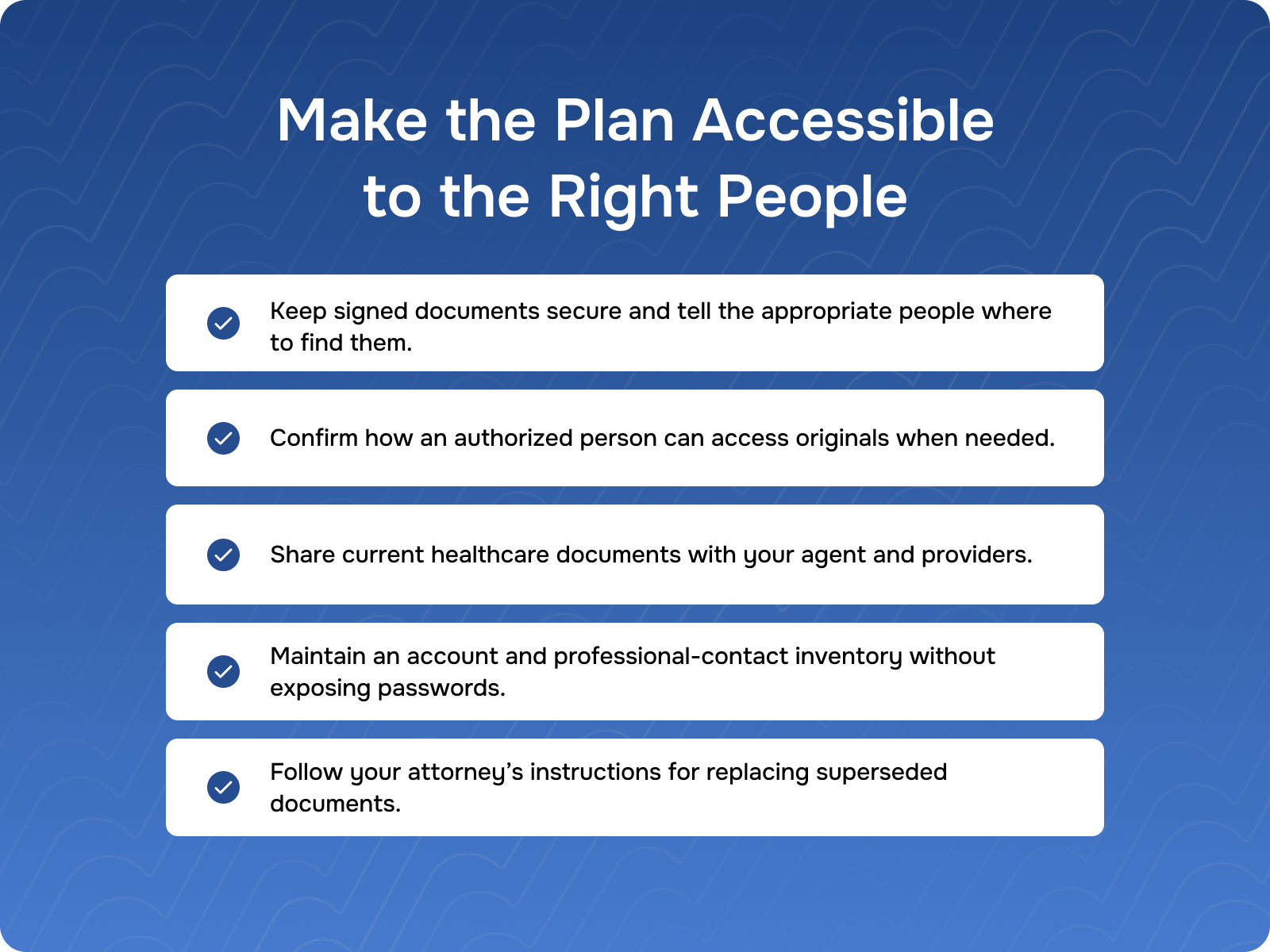
An estate planning guide can help you identify questions, but the value comes from making choices that reflect your life and communicating them clearly. Start with the documents you already have, note what is missing or outdated, and arrange the right professional conversations.
Highland Trust Partners can help you consider how your accounts, beneficiaries, and broader financial goals fit together through trust and estate planning coordination. Work with a qualified estate-planning attorney to prepare or revise legal documents, and involve your tax professional when needed. A coordinated review can make the plan easier for both you and your loved ones to understand.
More than 99% customer satisfaction is our success.


The expertise and dedication of this team have been game-changers for our business. Highly recommended! Outstanding service! Their innovative approach helped us achieve measurable success in record time

From start to finish, the team provided unparalleled support. They truly understood our needs and delivered results that surpassed our expectations.

The team at exceeded our expectations with their strategic insights and innovative solutions. Their professionalism and dedication to our success were truly remarkable.

Thanks to Casho, we streamlined our operations and achieved our growth goals. Their hands-on approach and expertise made a real difference for our business

From day one, Casho demonstrated professionalism and a genuine commitment to our success. Their innovative approach helped us reach new heights